Agency Care vs. Consumer-Directed Care — Which Is Right for You?
Virginia Medicaid's CCC Plus Waiver offers two ways to receive in-home personal care: Agency-directed care and Consumer-Directed care. The main difference is who picks and manages the caregiver.
How Agency-Directed Care Works
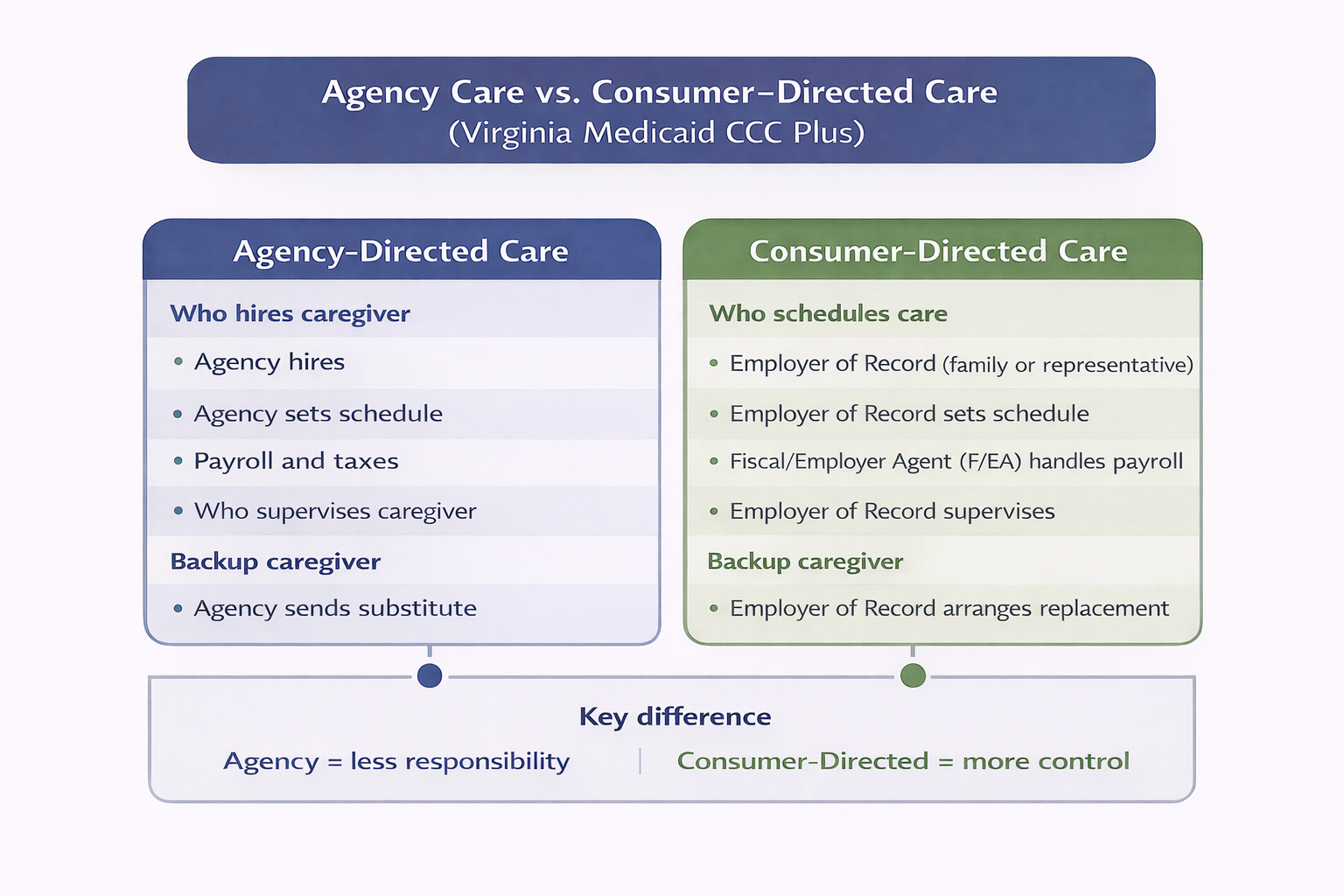
In Agency-directed care, a licensed home care company provides and manages the caregiver. The agency:
- Hires the caregiver
- Schedules shifts
- Supervises the caregiver
- Handles payroll and taxes
- Sends a replacement caregiver when one is unavailable
The family does not need to manage the caregiver. The agency takes care of the administrative responsibilities.
How Consumer-Directed Care Works
In Consumer-Directed care, the person receiving care or a designated representative (the Employer of Record) hires, trains, and manages the caregiver directly.
The caregiver is paid through a Fiscal/Employer Agent (F/EA) that handles payroll and tax reporting. This model allows a family member or trusted individual to be hired as the paid caregiver.
Both care models require approved personal care hours under the CCC Plus Waiver.
Key Differences in Management
| Agency-Directed | Consumer-Directed | |
|---|---|---|
| Who hires the caregiver | Home care agency | Employer of Record (EOR) |
| Who schedules care | Home care agency | EOR |
| Payroll and taxes | Home care agency | Fiscal/Employer Agent |
| Who supervises | Home care agency | EOR |
| Backup caregiver | Agency sends replacement | EOR arranges |
When Agency-Directed Care Is the Right Fit
Agency-directed care is the right fit when the family does not want to manage hiring, scheduling, or caregiver oversight.
When Consumer-Directed Care Is the Right Fit
Consumer-Directed care is the right fit when the family wants to choose their own caregiver — including a family member — and manage the caregiving arrangement directly.
Next Step
If you are not sure which model fits your situation, contact us today. We help Virginia families understand both options and navigate the CCC Plus Waiver process from start to finish.